How to replace the irreplaceable?

I read an article in The Economist titled "How do you replace a CEO like Tim Cook or Warren Buffett?" and I have to say: someone has finally described what we in headhunting see in the field every day.
What The Economist writes (and why it is worth your attention)
The Economist takes aim at the phenomenon of so-called "marathon CEOs"—bosses who lead companies for a decade or more. Not because they enjoy holding onto their chair, but because they deliver fantastic results. A textbook example: Tim Cook. Since 2011, he has moved Apple forward in revenues, profits, and company value in a way that only a few people in Big Tech can match today. And that is why boards naturally ask: How can this be replaced? (original article)
The article puts Apple in the same row as Walmart, Berkshire Hathaway, and JPMorgan. Everywhere there are "legends" on their way out (or in pre-retirement), and everywhere the same fear: what if a fall comes after passing the baton?
And now the most important number: Spencer Stuart analyzed successions after marathon CEOs in the S&P 500 between 2000 and 2024, and it turned out that:
- 85% of successors are internal people,
- 66% of those internal ones then lead the business worse than their predecessor (relative to the market),
- and almost half of the successors—both internal and external—lagged behind even the S&P 500 as a whole.
In other words: most successions after a legend end in disappointment. Not always a disaster, yet often a real "return to the average."
The Economist then offers three recipes:
- start with succession on time and take it seriously (not as a PowerPoint ritual),
- look for talent deeper in the organization and continuously update the plan (because the world changes faster than marathon CEOs),
- do not be afraid of external candidates, especially when the business needs a turnaround or a new chapter.
And at the conclusion comes a wonderful sentence: "No Cookalikes, please." That is: no copies of Tim Cook. Apple does not need "another Tim," it needs a boss for a different world.
What I think about this as a headhunter
I will start with that last sentence, because in practice it is the biggest landmine.
"No Cookalikes" is precisely what boards most often fail to do. For 15 years, I have watched how boards panic at the idea of change the moment they have a successful, long-term CEO. And their instinct is almost always the same:
"Find us someone just as good… yet mainly similar."
This sounds logical. In reality, it is a recipe for disaster. Why? Because Cook was a great answer to Jobs's question. Jobs's Apple needed a professional for scaling, processes, supply chain, discipline, and ecosystem monetization. Cook did that masterfully.
Yet today's Apple has completely different questions:
- AI,
- deglobalization,
- pressure on China,
- the need for the "next big thing" beyond the iPhone,
- and a new technological wave overall.
And when I look at speculations that Apple is accelerating succession and considering an internal name like John Ternus, it fits right into the cultural DNA of the company: maintaining continuity.
Continuity is fine—but only in what will still work tomorrow. A copy of the predecessor is wrong at the moment when the predecessor's success grew out of conditions that are disappearing.
A headhunting (and often managerial) proverb says "you don't want to be the one who follows a legend, you want to be the one after that first successor" :-) and it is sadly true. And it is not about the successors being bad. It is about boards confusing stability with the right answer for the future.
Three typical mistakes of boards that the article described… and that I sign in blood
1) They confuse loyalty with potential. An internal candidate is "our person"—they know the business, the culture, the processes. Great. Yet that does not yet mean they can rewrite the company for the next stage. Internal choices often win because they are comfortable, not because they are the best. The data from the article confirms this brutally clearly.
2) They look at past KPIs instead of future challenges. When searching for a successor, I hear the sentence: "We want someone who has behind them what our CEO did." Instead, they should be saying: "You want someone who will do what nobody has done yet" because that is the exact point where growth breaks.
3) They start late and then choose out of necessity. The Economist puts it diplomatically, yet the reality is that succession often starts being addressed when the CEO first hints at fatigue. That is too late. A sensible business maps the market and internal talent from day one of a new era.
What follows from this for businesses here as well (not just for Apple)
If you have a CEO who is a "marathoner" and delivers results, congratulations. Yet at the same time, it means that:
- succession is your biggest strategic risk,
- and probably also the most expensive mistake you can make.
Practically:
- Start mapping the market right away. Even if the CEO is not leaving. Even if they are 45 and run marathons.
- First, write down future scenarios with them. AI? Regulation? New markets? Product change? Pressure on margins?
- Derive the successor's profile from those scenarios, not from the profile of the current boss.
- An internal candidate yes—but only if they are a different type of leader. A successor is not a "continuation of the series," but a new season.
- An external person is sometimes a necessity, not an evil. Especially when the business knows it must break inertia.
The point at the end
The Economist summed it up elegantly: legends are hard to replace. And the worst idea is to look for their copies.
I will say it less elegantly:
When you look for a "new Cook," you will probably get the first person who convinces you that they are Cook. And that is almost always a mistake.
The right question is not: "Who is most similar to the current CEO?"
The right question is: "Who is the best for the business we will need in 5–10 years?"
And if a board cannot answer that on its own, that is not a weakness. That is normal. That is what you hire us for. :-)

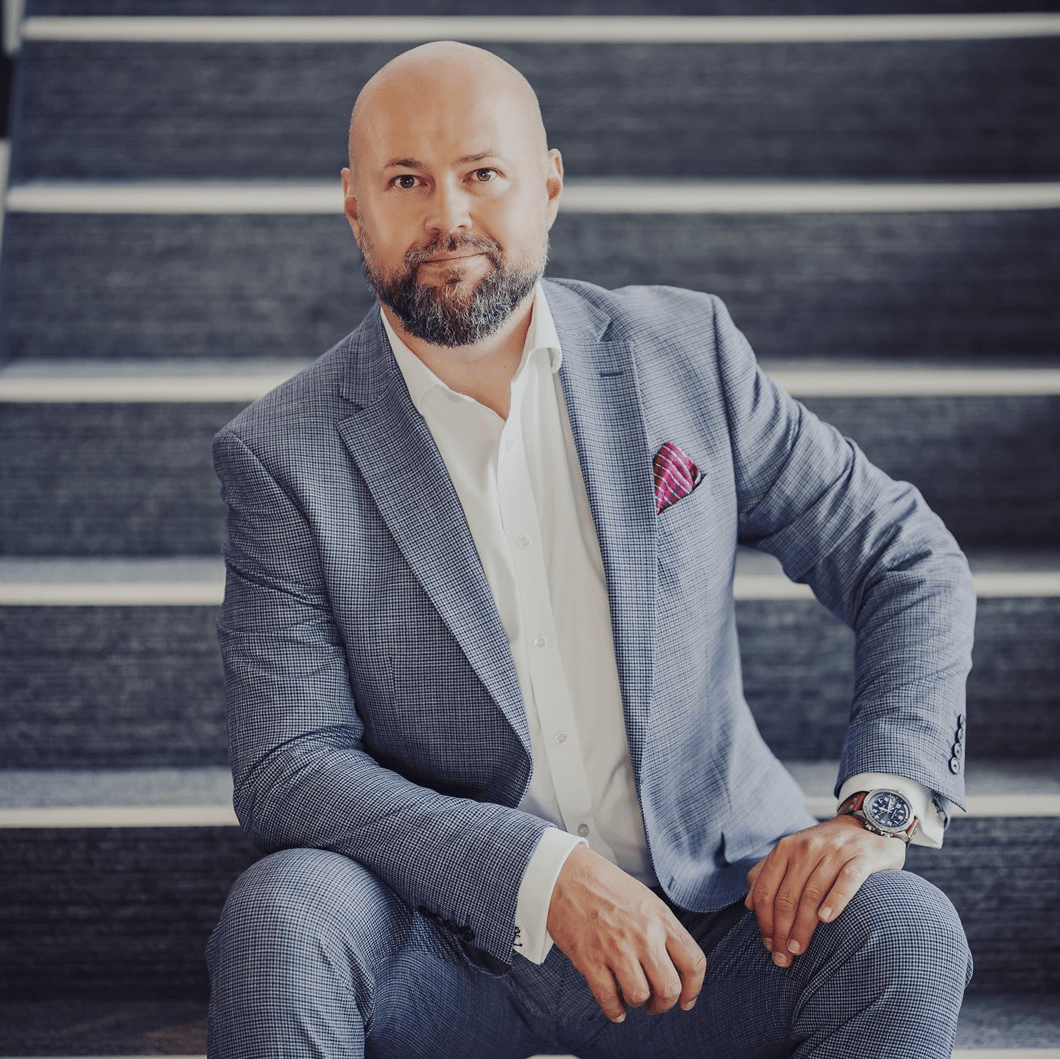
Pavel Plachý is the founder of Flow-r Executive Search. He began his career in business intelligence, working for both Czech and multinational companies in the Czech Republic, Slovakia, and the United Kingdom. He has also held international top management roles, leading teams in three countries with a total of more than 700 employees.
In 2008, he founded his own company focused on finding strategic candidates and, since then, he and his colleagues have been dedicated to executive search. He finds top managers and strategic experts for his clients.