How to tell that the new CEO isn't the right fit

For a CEO working for an investment group, time is the most expensive commodity.
When you make a mistake, you usually do not recognize it within two weeks. Yet within six months, the signals always appear.
The problem is that they are often overlooked—because the CEO "hasn't had enough time yet," "the business is complex," or "we need to be patient." Yet the investment horizon is relentless, and nobody can ever give back a lost year.
1. The CEO is still getting oriented, yet not making decisions
The first warning sign comes early.
The CEO spends a lot of time in meetings, absorbing information, and mapping the situation. That is fine—to a certain extent. However, if clear priorities and decisions are still not visible even after a few months, it is a problem.
The right CEO:
- quickly understands where the value lever is,
- separates the important from the merely interesting, and
- starts deciding even when they do not have all the data.
The wrong CEO waits for certainty that never arrives in an investment environment.
2. Avoiding unpopular decisions
A CEO for an investment group cannot be liked by everyone.
If they are "respected by everyone" after half a year, that is suspicious.
Typical signals:
- postponing personnel changes,
- tolerating long-term weak performance,
- trying to "stabilize the atmosphere first."
Stability is important, but not at the expense of future value. A CEO who fears conflict quickly becomes a brake in an investment environment.
3. Talking about vision, without changing reality
Vision without execution is a presentation, not leadership.
Warning signs:
- plenty of words about culture and values,
- few concrete changes in processes, costs, or priorities,
- no clear plan for what must happen in the next 90 days.
The right CEO knows how to:
- translate the investment thesis into concrete steps,
- set the pace, and
- show that the company has genuinely moved forward.
4. Not understanding investor pressure — or rejecting it
A CEO for an investment group must be able to work with the board and the investor—not as an opponent, but as reality.
If the CEO:
- perceives pressure on performance as "micromanagement,"
- defends the status quo instead of looking for solutions, or
- closes themselves off into "protecting the business from the investor,"
it is a signal that they have not understood the role they stepped into.
A CEO is not there to protect the company from the investor; they are there to fulfill the investment story.
5. Not working with time as a limited resource
Time in an investment environment is not neutral.
Every month without progress reduces value.
Warning sentences:
- "We will see in a year."
- "Now is not the right moment."
- "We still need to analyze this better."
The right CEO:
- works with clear milestones,
- knows what must happen in 90, 180, and 360 days, and
- is able to say: "We made a mistake here, we are going another way."
6. Performance does not change — only the explanations do
Perhaps the most important signal.
If after six months:
- the business does not operate faster,
- decisions are not made more simply,
- money does not flow more transparently,
- yet the explanations are increasingly sophisticated,
The problem is not in the company. It is in the CEO.
What to do about it (and when to act)
An investor should be clear on:
- what the measurable signals of success are after 3 and 6 months,
- where tolerance ends and risk begins, and
- who has the courage to say "this is not working."
The longer you wait, the more expensive the fix becomes.
The takeaway
A CEO for an investment group is not about likability or how comfortable the organization feels.
It is about whether the business is rapidly increasing its future value.
When a CEO does not bring change in the first few months, they usually will not bring it later either—and in the investment world, that is a luxury few can afford.

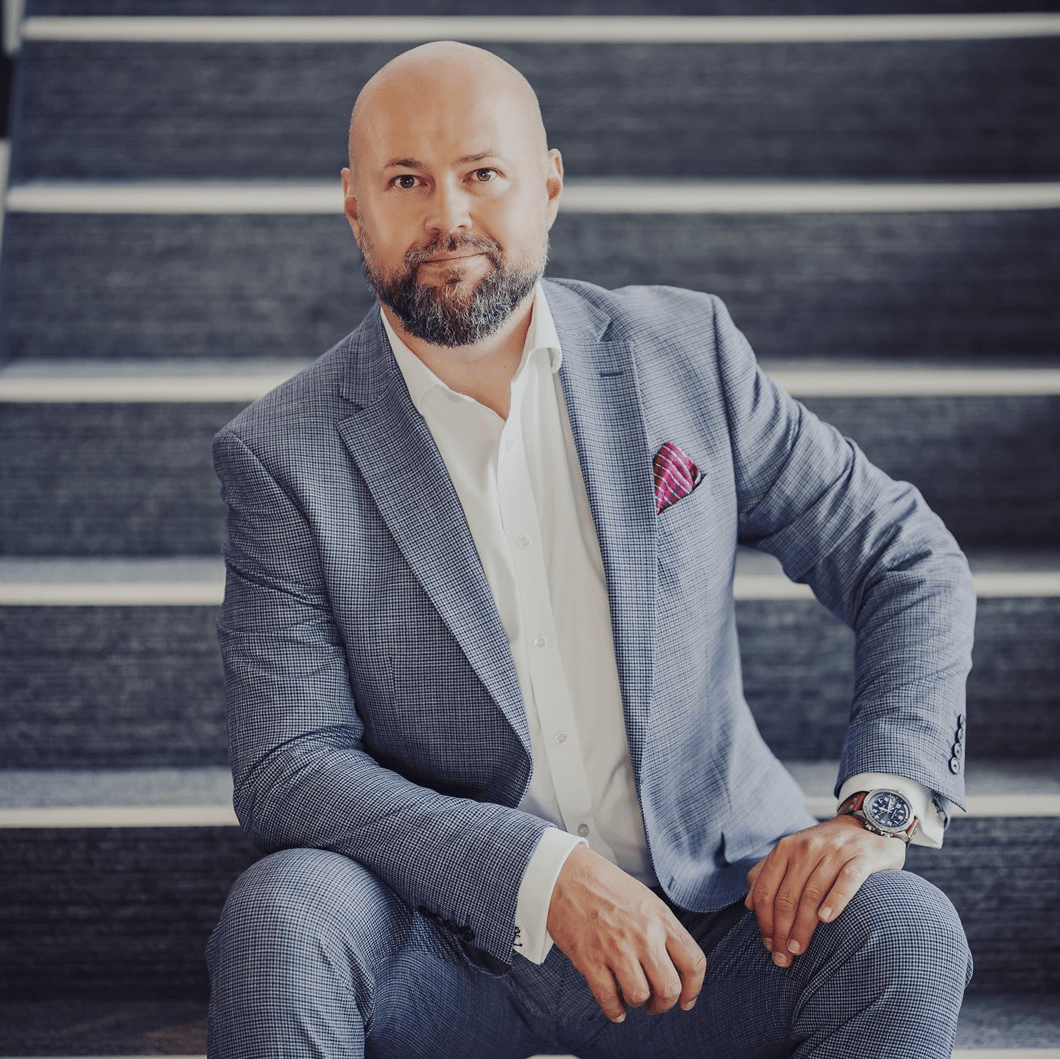
Pavel Plachý is the founder of Flow-r Executive Search. He began his career in business intelligence, working for both Czech and multinational companies in the Czech Republic, Slovakia, and the United Kingdom. He has also held international top management roles, leading teams in three countries with a total of more than 700 employees.
In 2008, he founded his own company focused on finding strategic candidates and, since then, he and his colleagues have been dedicated to executive search. He finds top managers and strategic experts for his clients.