Why selecting a CEO for an investment group is a completely different discipline

A CEO for an investment group is not a "better manager."
They are a tool for executing the investment thesis.
And whoever fails to understand this right at the beginning usually loses a year—sometimes even the entire investment.
The investment horizon changes everything
Investment groups do not move in decades. They typically work with a horizon of 3–5 years. That is a fundamental difference compared to family businesses or corporations, where stability, continuity, and "long-term sustainability" in the softer sense of the word are addressed.
An investor buys:
- a business in trouble (distressed),
- or a business with untapped potential.
In both cases, they are not buying the past. They are buying future value.
And the CEO is the main lever for how to create this value in time.
The CEO has no time to "look around"
A CEO stepping into a portfolio company does not have the luxury of a slow ramp-up.
They do not have a year to "get to know the culture" and "absorb the environment."
They must:
- orient themselves very quickly,
- understand where the business truly makes money and where it burns cash,
- identify key bottlenecks,
- and start taking clear, often unpopular steps.
Not in two years. Within a matter of months.
A CEO for an investor is not rewarded for keeping the peace. They are evaluated on whether they accelerate change.
The goal is not well-being. The goal is value.
This is the most sensitive, yet crucial point.
- The goal of an investment group is not the well-being of employees.
- The goal is growth in performance, potential, and company value so that the exit can be successful.
That does not mean ignoring people. It means:
- making decisions according to their impact on business value,
- changing structures, roles, and people if they hold back the future,
- optimizing, simplifying, and sometimes cutting hard.
A CEO who wants to "win popularity" while postponing key decisions is a risk for the investor, not a win.
Why many CEOs fail in this environment
Because they were successful in a different context.
Many CEOs:
- grew up in an environment of steady growth,
- were used to strong backing,
- never worked with the pressure of an exit and a clear time limit.
Yet a CEO for an investment group must handle:
- working with incomplete data,
- rapid diagnostics of the business,
- pressure from the board and the investor,
- decisions that hurt in the short term, yet create value in the long term.
It is not a better or worse role.
It is a different discipline.
The CEO as the implementer of the investment thesis
For an investor, how a CEO speaks is not what is key.
What is key is how they think and decide.
The right CEO for an investment group:
- understands the logic of the investment,
- can translate strategy into concrete steps,
- works with time as a limited resource,
- and knows that their task is not to "administer" the company, but to move it into the next phase.
The point at the end
A CEO for an investment group is not about a title or a resume.
It is about the ability to quickly create value within a limited time.
Whoever looks for a CEO while thinking of a manager usually pays twice.
Once during recruitment. The second time at exit.

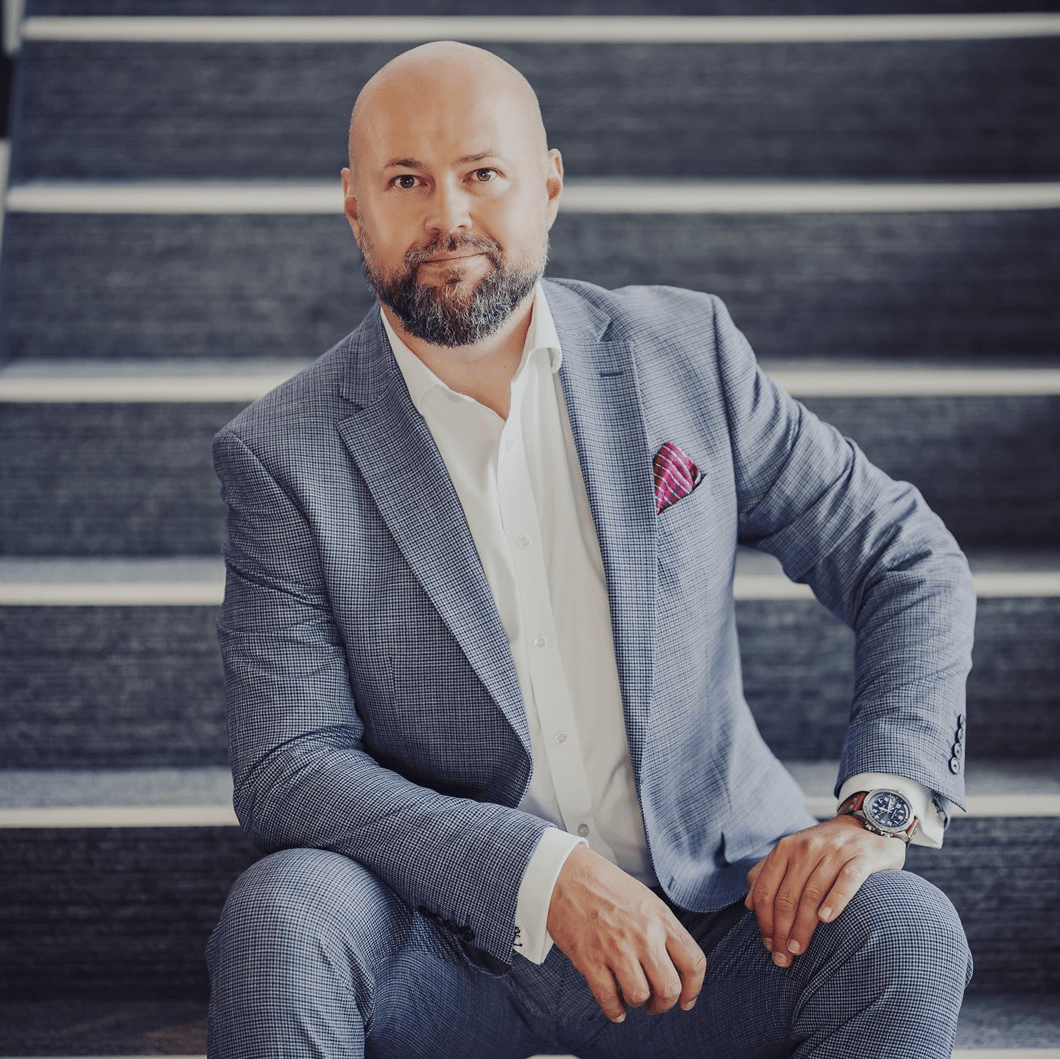
Pavel Plachý is the founder of Flow-r Executive Search. He began his career in business intelligence, working for both Czech and multinational companies in the Czech Republic, Slovakia, and the United Kingdom. He has also held international top management roles, leading teams in three countries with a total of more than 700 employees.
In 2008, he founded his own company focused on finding strategic candidates and, since then, he and his colleagues have been dedicated to executive search. He finds top managers and strategic experts for his clients.